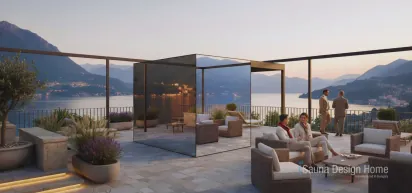
Mirror glass sauna
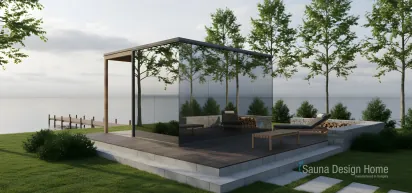
Architectural Glass Solution
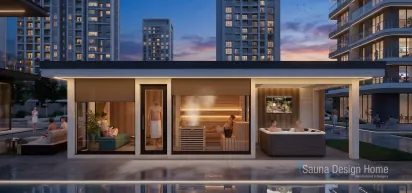
Sky Residence wellness house
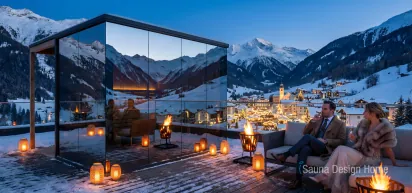
Mirrorsauna
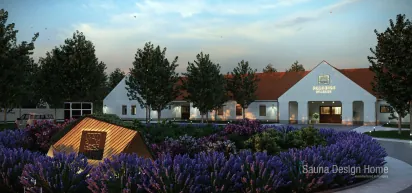
VIP Equestrian Facility - Different from the Others
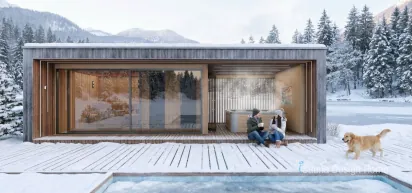
Outdoor sauna, wellness house, mini holiday home in custom sizes
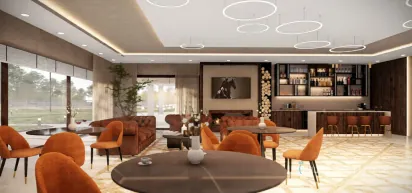
Comprehensive Equestrian Facility Design
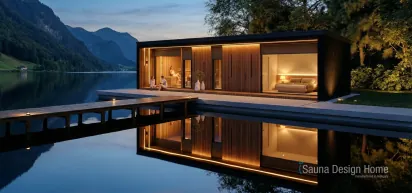
Premium sauna experience in your home
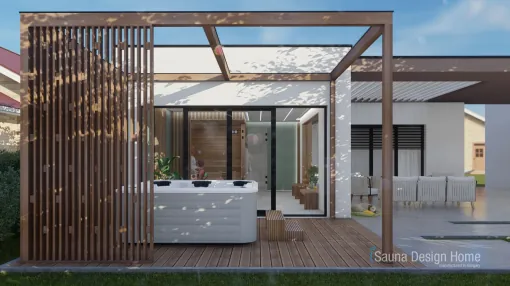
One of the biggest promises of modern architecture was openness. More light, more glass, more connection to the outside world. But beyond a certain point, openness stops being an advantage and starts becoming a problem. Spaces become too bright, too warm, too exposed.
True quality is not defined by how much we let in, but by how precisely we can control it. This is where functional design begins, where shading and room dividers are no longer accessories, but essential elements.
In the past, room division was simple: we built walls. One room had one function, one space had one purpose. Closed structures with clear boundaries. Today, open plan interiors dominate, where the living room, kitchen and dining area function as one connected environment, often linked directly to outdoor spaces. Functions no longer exist separately. They flow into each other and adapt continuously to changing situations throughout the day.
This openness, however, creates new challenges. How do we preserve privacy? How do we regulate light? Where does one function begin and another end? The answer is no longer the wall itself, but a more refined and intelligent system: lamellas, interior room dividers, sliding partition walls and shading solutions.
These elements do not create rigid boundaries. Instead, they allow spaces to be reorganized depending on how they are being used. A function can be opened up or separated with a single movement.
The way a space functions is not primarily determined by design, but by physics. Incoming sunlight transforms into heat, surfaces warm up and air begins to move. Large glass surfaces without proper shading can overheat interiors during summer while increasing heat loss in winter.
Well designed shading systems do not darken a space. They regulate it. The angle of lamellas, the positioning of shading elements and the choice of materials all influence how the space behaves throughout the day. A properly designed system reduces heat load, stabilizes the indoor climate and preserves the visual connection with the surroundings at the same time.
This is the point where design moves beyond appearance and becomes performance.
A well functioning interior is a system of connected zones. Without smooth transitions between them, the space begins to fall apart.
Lamella room dividers and solid wood elements play a key role here. They do not completely close off the space, but guide it. They separate functions while allowing air, light and movement to continue flowing naturally. A carefully positioned element creates a visual boundary without interrupting openness.
Sliding partition walls are especially important in this context. They allow spaces to remain both open and private at the same time. In one moment, the area functions as a social space, while later it can transform into a more intimate and secluded environment.
Interior room divider systems, whether made from lamellas, wooden panels or textured surfaces, do not block spaces. They organize them. They help different functions coexist while maintaining a unified atmosphere.
This is especially important in wellness spaces, where the experience does not happen in a single moment, but as a process: arrival, preparation, use and relaxation.
One of the least visible yet most critical aspects of open spaces is sound. The larger and more connected a space becomes, the harder it is to control acoustics. Hard surfaces reflect sound, noises build up and eventually the space becomes mentally exhausting. At this point, acoustic wall panels are no longer optional extras, but necessary elements.
An acoustic panel does not only reduce echo and improve sound clarity. It directly affects comfort and usability. Conversations become clearer, background noise decreases and the space feels calmer and more natural to use.
At the same time, acoustic wall panels are not purely technical solutions. Their material, texture and placement become part of the overall design language and strengthen the character of the space itself.
Once the space functions properly, refinement can begin. Decorative lighting, hidden LED strips, warm light tones and custom design elements together create the atmosphere expected from a premium interior.
Balance, however, remains essential. Poorly positioned lighting can destroy the proportions of a room, while excessive decoration takes attention away from the architecture itself. Premium quality is not about adding more elements, but about achieving harmony between them.
Functional design does not mean adding more. It means designing more precisely. Creating spaces that respond naturally to the way we actually live and use them. The result is not only a beautiful interior, but one that continues to function comfortably over the long term.
This is the level where design no longer only looks good. It works.
